


 Financing

4/2/2026
Electric Vehicle Charging Station Installation Guide for Benbrook Residents
Share:


Between triple-digit summers and more Texans switching to EVs, reliable home charging is becoming a real quality of life upgrade in Benbrook. EV charging station installation is not just about convenience; it is about safety, code compliance, and making sure your electrical system can handle a new continuous load without overheating conductors or tripping breakers. In this guide, Tioga Plumbing and Electric walks you through charger options, home requirements, and the smartest way to plan an install that holds up long term.
EV Charging Station Installation in Benbrook: A Practical Guide
Texas EV adoption continues to grow, and more homeowners want faster charging than a standard wall outlet can provide. A properly installed home EV charging station can also reduce your dependence on public chargers and help you take advantage of off-peak charging schedules if your utility plan supports it.
For many drivers, EV fuel costs can be meaningfully lower than gasoline. The U.S. Department of Energy has shared comparisons showing the national average cost to fuel an EV can be about 60% lower than gasoline, depending on rates and vehicle efficiency.
In Benbrook, a lot of homes already have garages and electrical panels that can support upgrades, but you still need a load calculation and a panel inspection before you commit. The goal is not just to make it work today, but to keep it safe and dependable through Texas heat and years of charging cycles.
Understanding Charger Types Before You Start
Before you choose equipment, get clear on the two main charging levels homeowners use.
Level 1 charging
Level 1 uses a standard 120V household receptacle and typically adds about 3 to 5 miles of range per hour, depending on the vehicle and conditions. It is often fine for very low daily driving, but it can be limiting for commuters, road trips, and multi-vehicle households. It can also keep a circuit under sustained load for long periods, which is why you still want the outlet, wiring, and breaker to be in good shape.
Level 2 charging
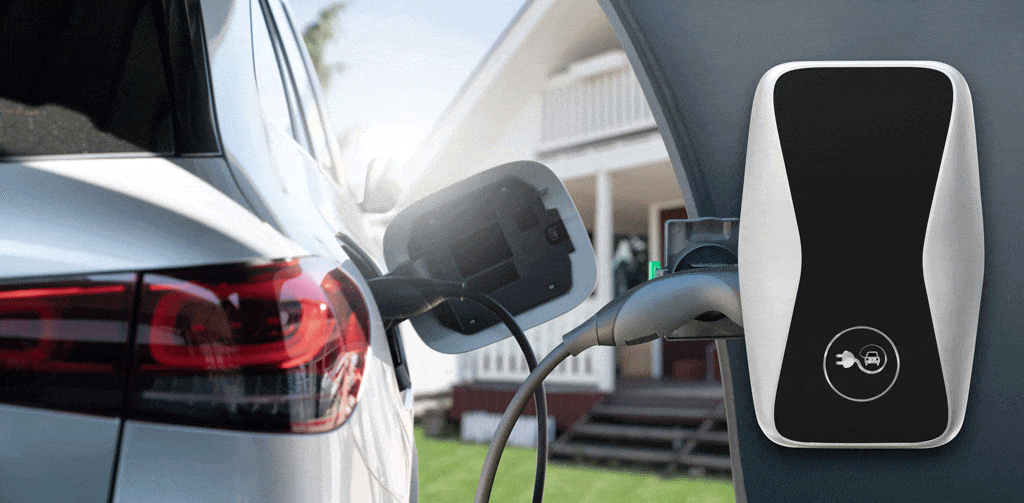
Level 2 is the most common “this actually fits real life” option for full-time EV drivers. It uses a dedicated 240V circuit, often on a 40 to 60 amp breaker, and can deliver roughly 20 to 60 miles of range per hour depending on amperage, charger output, and vehicle acceptance rate. Level 2 EV charger installation in Benbrook should be handled by a licensed electrician because conductor sizing, breaker selection, and terminations need to match the continuous load requirements and your panel’s available capacity.
For planning, remember that EV charging is typically treated as a continuous load, meaning the circuit must be sized with a 125% factor. That affects everything from breaker size to conductor gauge. Many Level 2 setups require 6 AWG copper, but the correct size depends on amperage, run length, voltage drop considerations, and the installation method.
Smart chargers can be worth it if you want:
- time-of-use scheduling
- energy monitoring
- load sharing for two EVs
- alerts and diagnostics through an app
If you are thinking ahead, it is smart to plan for a future second EV, a workshop circuit, or other electrical upgrades so you do not end up redoing work later.
Requirements for Residential EV Charger in Benbrook, TX
Most successful installs start with a quick, methodical pre-check of your home’s electrical system, then move into permitting and a clean installation plan.
Electrical panel evaluation
A load calculation is the first step. Electricians typically use NEC Article 220 methods to evaluate existing loads and determine whether your panel has enough capacity for a new EV charging circuit. Sometimes you can add the charger as-is. Other times you may need a subpanel, a service upgrade, or a managed load solution.
Signs you may have limited capacity or issues that need attention include:
- flickering lights when major appliances start
- a warm panel cover or warm breaker handles
- double-tapped breakers or crowded panel wiring
- frequent nuisance tripping
Dedicated circuit installation
A Level 2 charger should be on a dedicated 240V circuit. Installation planning often includes:
- conduit routing and mounting height decisions
- copper conductor sizing based on calculated load and run distance
- grounding and bonding checks
- GFCI requirements based on charger type and breaker configuration
- outdoor-rated wiring and fittings if the charger is exterior mounted
Texas heat matters, especially for garage installs. Conductors and insulation ratings such as THHN or THWN-2 are commonly used in conduit, but the correct selection depends on the environment and the installation approach.
Permitting and inspection requirements in Benbrook
For 240V EV charger installs, a permit is commonly required. The process usually includes an electrical permit and an inspection after installation. Unpermitted work can create safety risk and may cause issues with insurance claims if there is ever an electrical fire or equipment damage event. Tioga’s team can help you understand what documentation is needed and what to expect during inspection.
Utility coordination
In some neighborhoods, higher EV adoption can raise questions about service capacity. If a service upgrade is needed, coordination with Oncor Electric Delivery may be part of the process. This is also a good time to ask about time-of-use plans or billing options that may reduce charging costs.
Safety Considerations for Home EV Charging Station in Benbrook
A safe EV charger install is not just “it powers on.” It is also stable under heat, continuous use, and real-world electrical conditions.
Key safety elements include:
- overcurrent protection that matches the calculated load
- ground-fault protection to reduce shock risk
- correct torque at breaker and terminal connections to prevent overheating
- proper bonding and grounding so fault paths are safe and predictable
- surge protection to help protect sensitive EV charging electronics from voltage spikes
Improper installation can lead to conductor overheating, repeated breaker trips, equipment damage, and in worst cases, fire risk. It can also void charger warranties if the manufacturer requires installation by a licensed electrician.
Why Hire Professionals for EV Charger Installation
Texas licensing requirements through the Texas Department of Licensing and Regulation exist for a reason. A licensed electrician helps protect you from common risks like undersized conductors, incorrect breaker selection, poor terminations, and unsafe routing. Professional installation also supports code compliance and inspection readiness, and it helps keep manufacturer requirements intact.
For Benbrook homeowners, local experience matters. Familiarity with inspection expectations, heat-appropriate installation methods, and long-term maintenance planning can make the difference between a charger that works for a month and a charger that stays reliable for years.
From Permit to Plug-In: Your Go-To Electric Car Charger Electrician in Benbrook
Tioga Plumbing and Electric is not just another contractor. We are a Texas-based team focused on safe, code-compliant electrical work that holds up under real daily use. If you are planning an EV charger, we can help with load calculations, panel evaluations, dedicated circuit installation, and the permitting process so you can charge confidently at home.
If you need EV charging station installation in Benbrook, you can schedule online for consultation and appointments. If you also want broader support beyond EV charging, explore our one-stop electrical services. For larger upgrades, you can ask about our available financing options during your consultation.
FAQs
What types of EV chargers are available for residential installation in Benbrook?
Most homeowners choose Level 1 for light use or Level 2 for faster home charging on a dedicated 240V circuit.
How much does it cost to install a home EV charging station in Benbrook?
Cost depends on panel capacity, circuit distance, amperage, and whether a service upgrade is needed, so a load calculation and site inspection are the best starting point.
Are there any local or federal incentives for installing an EV charger in Texas?
Incentives can change, but many homeowners may qualify for federal credits or utility programs depending on location and equipment, so it is worth checking current eligibility during planning.
Can I install an EV charger myself, or do I need a licensed electrician in Benbrook?
A Level 2 charger typically requires permitting and code-compliant electrical work, so using a licensed electrician is the safer choice and often required.
How long does it take to install a residential EV charging station?
Many installs can be completed in a single visit, but panel upgrades, permitting timelines, and utility coordination can extend the schedule.
Share:
Taking a bite out of Your Plumbing needs
 817-484-5356
Other Plumbing Services
Taking a bite out ofYour Plumbing needs

Why Hiring a Professional Plumber in Benbrook Saves You Time and Money
A small leak can turn into water damage fast, and a “simple clog” can become a weekend-long headache if the fix is wrong. In Benbrook, cold snaps, drought cycles, and shifting soil can push plumbing systems to their limits, especially in older homes or properties with past DIY work. We see this every week at... Read more »

Why You Need a Licensed Plumber in White Settlement for Home Repairs
A burst pipe, a clogged drain that keeps coming back, or a leaking water heater can derail your whole week, especially when the damage spreads behind walls or under floors. For White Settlement homeowners, the quickest path back to normal is usually the safest one: a licensed plumber who can diagnose the real cause and... Read more »
Preparing Your Benbrook Home for Power Outages with Backup Solutions
In Texas, extreme heat, ice, and severe storms can all push the electrical grid hard. Benbrook homeowners choose backup power solutions that can make the difference between a minor inconvenience and a costly emergency. When the power goes out, the impact is not just comfort. It can affect food safety, home security, medical equipment, and... Read more »

How Professional Electrical Inspections Prevent Major Repairs in Benbrook
Electrical problems rarely start with a dramatic bang. In most Benbrook homes, they show up as small annoyances, like a breaker that trips “for no reason” or lights that flicker when the AC kicks on. That is why electrical inspections are worth treating like preventive care, not a last-minute scramble. At Tioga Plumbing and Electric,... Read more »
Electric Vehicle Charging Station Installation Guide for Benbrook Residents
Between triple-digit summers and more Texans switching to EVs, reliable home charging is becoming a real quality of life upgrade in Benbrook. EV charging station installation is not just about convenience; it is about safety, code compliance, and making sure your electrical system can handle a new continuous load without overheating conductors or tripping breakers.... Read more »

Signs You Need a Licensed Electrician in White Settlement Right Away
If you own a home in White Settlement, your electrical system is working harder than ever. Between high-demand HVAC cycles, smart home devices, and newer additions like EV chargers, even “small” symptoms can turn into expensive repairs fast. At Tioga Plumbing and Electric, we treat warning signs as early opportunities to protect your home, your... Read more »
How Professional Electrical Inspections Prevent Major Repairs in White Settlement
Most of us only think about our electrical system when something stops working. But in White Settlement, where many neighborhoods include homes built in the 1950s through the 1980s, aging breaker panels, older wiring, and past DIY changes can quietly increase risk over time. Electrical inspections in White Settlement help you catch those small issues... Read more »

Common Electrical Safety Issues Found in Older White Settlement Homes
Many homes in White Settlement, Texas, were built decades before modern electrical codes established today’s safety standards. As a result, homeowners may unknowingly live with outdated wiring, undersized panels or missing safety devices. These electrical safety issues rarely show obvious warning signs until a problem occurs. Taking a proactive, safety-first approach helps protect your home,... Read more »
When Is the Right Time for an Electrical Panel Upgrade in Benbrook?
An outdated electrical panel is more than an inconvenience, it can pose a serious safety risk. As homes add more appliances, EV chargers, and smart devices, older systems may struggle to safely distribute electricity. If you’re wondering when it’s time for an electrical panel upgrade, this guide explains the warning signs homeowners should watch for. ... Read more »

Taking a bite out ofYour Plumbing needs
We make fixing your home easier than ever. Whether it’s a leaky pipe, faulty wiring, or an urgent repair, our experts deliver fast, reliable solutions you can count on.