


 Financing

7/23/2026
Home Maintenance Tips and Troubleshooting: Diagnosing Under-Slab Leaks vs. Normal Settling
Share:


Are Your Home’s Symptoms Pointing to an Under-Slab Leak or Just Summer Settling?
Is that new, hairline crack above your door frame just a sign of your house settling into its footprint, or is a hidden water leak quietly washing away the soil beneath your foundation? At Tioga Plumbing, we know that when you are searching for reliable home maintenance tips and troubleshooting, separating a harmless seasonal shift from a severe under-slab plumbing failure is one of the most critical skills you can develop as a homeowner. Every year, we see subtle changes in foundation alignment leave property owners wondering if they are facing a minor cosmetic annoyance or a catastrophic structural threat.
During a severe summer drought, peak heat and an extreme lack of moisture create intense environmental stress on your home’s infrastructure. The ground beneath your floorboards is not static; it reacts dramatically to the climate, pulling away from concrete and leaving heavy, water-filled pipes completely unsupported. Diagnosing these complex issues early requires recognizing the physical warning signs before a slow drip turns into a massive sinkhole under your living room. Whether you need comprehensive plumbing and electrical services to assess complex property damage, or you are ready to contact our water heater specialists for a localized check, our team has proven time and again that catching the problem early saves your property from extensive, costly structural damage.
The Impact of Peak Heat on Expansive Clay Soils and Buried Plumbing
Understanding why your plumbing fails often starts by looking at the dirt beneath your feet. In our years of diagnosing foundation-level plumbing failures, our team has seen firsthand how the Hurst and greater DFW area is characterized by highly expansive clay soils. This specific type of earth behaves much like a sponge. When it rains, the clay absorbs moisture, swelling up and pushing against your home’s concrete foundation. However, when July’s peak heat arrives and the soil dries out, that same clay shrinks dramatically. This constant cycle of heaving and shrinking puts immense physical tension on every piece of buried infrastructure on your property.
As the soil pulls away from the bottom of your concrete slab during a dry spell, it leaves behind empty voids. The plumbing lines running beneath your home—whether they are older cast iron sewer mains or modern PVC supply lines—suddenly lose their physical support. Instead of resting securely in compacted dirt, these heavy, water-filled pipes are left suspended in mid-air across these newly formed gaps. Gravity and the weight of the water pull downward, creating intense stress on pipe joints and fittings that were never designed to bear that kind of load.
How Soil Shrinkage Stresses Under-Slab Lines
The mechanics of soil pulling away from concrete slabs directly accelerate plumbing system wear. As the expansive clay retreats, the resulting friction and loss of support lead to micro-fractures in your plumbing materials. Over time, these tiny stress fractures grow. A single compromised joint in a pressurized water supply line can rapidly escalate into a full-scale slab leak.
The compounding damage loop: Once a pipe cracks and begins leaking into the void beneath your slab, the newly introduced water causes the localized clay soil to swell rapidly, while the surrounding soil remains dry and shrunken. This creates an uneven, localized upward pressure point directly against the concrete slab. The foundation is now being pushed up in one specific spot while sinking in others, which is exactly what causes severe structural cracking, sticking doors, and uneven floors. Environmental factors make proactive home maintenance troubleshooting absolutely critical during the hottest months, as we frequently observe that the window between a minor pipe fracture and major foundation damage is incredibly short.
Comparing the Symptoms: Normal Foundation Shift vs. Active Slab Leaks
Because the symptoms of seasonal settling and active slab leaks often overlap, diagnosing the root cause requires a careful, objective evaluation of your home’s behavior. A house resting on expansive clay will naturally shift to some degree. Minor drywall cracks or doors that temporarily stick during seasonal transitions are relatively benign signs of this normal movement. However, when a plumbing failure is the driving force behind the movement, we find that the symptoms are much more aggressive and accompanied by specific moisture indicators.
A hidden leak can waste thousands of gallons of water per year, compounding the damage to the surrounding soil and driving up your utility costs. To help you weigh the evidence and make an informed decision on your next steps, our technicians have broken down the definitive differences between normal seasonal shifts and the active plumbing emergencies we encounter daily.
| Symptom Category | Normal Foundation Settling | Active Under-Slab Leak Warning Signs |
|---|---|---|
| Wall and Ceiling Cracks | Hairline cracks along drywall seams, usually appearing slowly over years. | Sudden, jagged cracks that widen quickly; cracks radiating diagonally from window corners. |
| Flooring Conditions | Slight, gradual sloping noticeable only with a level. | Unexplained warm spots on tile or wood floors; damp carpets; cupping or buckling hardwood planks. |
| Utility Bills and Meters | Consistent water usage aligned with seasonal watering habits. | Sudden, massive spikes in water bills; the water meter dial spins constantly even when all fixtures are shut off. |
| Audible Indicators | Occasional creaking of wood framing as temperatures change. | The distinct, continuous sound of running or rushing water beneath the floorboards when no taps are open. |
| Odors and Air Quality | Normal, stale air in closed-off rooms or attics. | Persistent musty, mildew smells emanating from baseboards, floor vents, or lower cabinets. |
If your home in Hurst TX is only exhibiting minor drywall cracks during the peak of summer, you may just be dealing with seasonal shifts. However, if those structural changes are paired with a spinning water meter, a sudden drop in water pressure, or strange warm spots on your kitchen floor, you have crossed the threshold from normal settling into an active plumbing emergency. At this stage, visual inspection is no longer enough, and calling our team for immediate technical intervention is required.

Advanced Troubleshooting: When to Stop Investigating and Call a Professional
There is a strict limit to how much a homeowner can achieve with DIY visual inspections. You can check your meter, monitor your utility bills, and walk your floor plan looking for warm spots, but once you suspect a leak under your concrete foundation, the investigation phase is over. Excavating or attempting to repair slab lines without proper licensing, training, and specialized equipment is incredibly dangerous and often leads to catastrophic property damage.
Ignoring sudden utility spikes or persistent moisture will inevitably result in severe foundation degradation. In one recent case we handled here in Hurst, a homeowner noticed a sudden drop in water pressure and unexplained moisture pooling near the baseboards. Rather than attempting to break through the concrete themselves, they called Tioga Plumbing for professional help. Our technician arrived, diagnosed the problem using non-invasive tools, and repaired the hidden line in a quick and efficient manner, providing the courteous and professional service we are known for without needlessly tearing up the entire living room floor.
The Professional Diagnostic Process
When you call our licensed experts to investigate a suspected slab leak during a summer drought, we follow a rigorous, non-destructive diagnostic process to pinpoint the exact location of the failure.
- Comprehensive Meter and Fixture Evaluation: The process begins with a pressure test of the entire plumbing system. Our technicians isolate the main water line to confirm that the leak is indeed underground and not a running toilet or a dripping outdoor hose bib.
- Acoustic Leak Detection: Using highly sensitive ground microphones and acoustic listening discs, our professionals can hear the precise frequency of water escaping from a pressurized pipe beneath inches of solid concrete. This allows us to trace the path of the hidden line.
- Thermal Imaging Scans: Infrared cameras are deployed across your flooring. Because hot water lines are frequent culprits for slab leaks, thermal imaging can easily spot the abnormal heat plumes radiating upward through the concrete, pinpointing the exact origin of the leak.
- Detailed Reporting and Resolution Strategy: Once our team isolates the leak, you receive a detailed report of the findings. This includes clear, straightforward options for resolving the issue based on the age of your plumbing and the layout of your home.
The Intersection of Plumbing and Electrical Systems in Complex Repairs
Severe slab leaks rarely happen in a vacuum; they often impact the surrounding infrastructure of your home. When water pools beneath your foundation, it can interact dangerously with nearby electrical conduits, grounding rods, or floor-mounted electrical outlets. Furthermore, repairing a compromised under-slab pipe is rarely as simple as just patching a hole. In many cases, the safest and most permanent solution involves completely rerouting the plumbing lines through the walls or attic to abandon the failing underground pipe entirely.
This is where complex repairs cross trades. Rerouting plumbing lines frequently necessitates electrical adjustments. If you are moving major appliances to accommodate a new plumbing layout, you must ensure the electrical panel can handle the shift. Modern, high-efficiency water heating systems rely heavily on both utilities working in perfect harmony. If you are considering upgrading during a major plumbing reroute, understanding the requirements for electric tankless water heaters is essential, as these units draw significant electrical loads that must be safely integrated with the new water lines.
Handling these multi-trade challenges is much smoother when you don’t have to coordinate between separate companies. Because Tioga Plumbing operates as a dual-licensed contractor, both the complex plumbing excavation and the necessary electrical safety checks are handled seamlessly by our single team. This organic crossover eliminates the frustrating delays of relying on outside subcontractors, ensuring that your home’s critical systems are restored safely and efficiently.
Resolution and Remediation: Securing Your Home’s Infrastructure
Once the root cause of the slab leak is found and the exact location is pinpointed, the professional repair phase begins. The immediate priority is isolating the compromised plumbing lines to stop the flow of water and halt any further erosion of the soil beneath your foundation in Hurst TX. From there, our technicians will walk you through the most viable repair strategies.
The two primary options for remediation are direct slab penetration or a complete line reroute. Direct penetration involves breaking a small, precise hole in the concrete floor directly above the leak, repairing the broken section of pipe, and repouring the concrete. While effective for isolated breaks, it can be disruptive to expensive flooring. The alternative is a line reroute, which bypasses the broken underground pipe entirely by running a new, durable PEX or copper line through your home’s walls or attic. Rerouting is often the preferred method for older homes, as it prevents future slab leaks from occurring in the same aging pipe system.
During a recent peak-summer emergency call involving a backed-up clean-out drain and overflowing fixtures, our team quickly diagnosed the root cause deep under the slab. We addressed the issue immediately, provided clear, straightforward repair options before any concrete was cut, and completely cleaned up the work area once the flow was restored. We believe this level of straightforward communication and clear explanation of findings is vital during an emergency situation. The ultimate goal is always restoring the home’s safety, securing the foundation against further water damage, and minimizing disruption to your daily life.
Frequently Asked Questions
How do I know if I have a leak under my slab?
The most definitive signs include a sudden, unexplained spike in your water bill, the sound of running water when all fixtures are turned off, and warm spots on your flooring. You may also notice a significant drop in water pressure or musty odors coming from your baseboards. If your water meter dial continues to spin after you have shut off every tap in the house, a hidden leak is highly probable.
What causes a slab leak in a house?
Slab leaks are primarily caused by soil shifting, pipe corrosion, and poor initial installation. In areas with expansive clay soil, the ground swells when wet and shrinks dramatically during dry spells, pulling away from the foundation and leaving heavy pipes unsupported. Over time, the resulting friction and tension cause the pipes to fracture or burst beneath the concrete.
How do you find a water leak under concrete?
Our professionals at Tioga Plumbing locate hidden leaks using non-invasive electronic detection equipment. We utilize acoustic listening devices to hear the frequency of escaping water through the floor, and thermal imaging cameras to spot abnormal heat signatures from leaking hot water lines. This technology allows us to pinpoint the exact location of the break without needlessly destroying your flooring.
Why did my water bill double in one month?
A sudden, massive increase in your water bill is almost always the result of a continuous, hidden leak. A fractured pipe under your foundation can waste thousands of gallons of water in a matter of weeks, running 24 hours a day without ever pooling inside your living space. If your local utility rates have not changed and your usage habits are the same, you should schedule a professional leak detection immediately.
How does severe summer drought affect my underground plumbing?
During a severe summer drought, the expansive clay soil beneath your home loses its moisture and shrinks significantly. This shrinkage creates empty voids under your concrete slab, removing the physical support that your buried plumbing lines rely on. Gravity then pulls down on the water-filled pipes, creating intense stress that eventually fractures the joints and causes severe leaks.
Can a slab leak damage my electrical systems or water heater?
Yes, severe slab leaks can compromise nearby electrical infrastructure. Water pooling beneath the foundation can interact with underground electrical conduits or compromise the grounding systems of your home. Additionally, if the leak causes a massive drop in water pressure, it can force your water heater to overwork or run dry, potentially burning out the heating elements and requiring complex, multi-trade repairs.
Share:
Taking a bite out of Your Plumbing needs
 817-484-5356
Other Plumbing Services
Taking a bite out ofYour Plumbing needs

What Are the Disadvantages of an Indirect Water Heater When Upgrading Home Systems?
Navigating System Upgrades and Heavy Cooling Loads Your air conditioner is running non-stop to fight off the afternoon heat, but every time the compressor kicks on, the lights in your living room dim. In our years of keeping homes comfortable across Hurst TX, the team at Tioga Plumbing has found that when you start making... Read more »

Summer Home Maintenance FAQ: Managing AC Electrical Loads and Water Heater Strain
Are Your Home Systems Ready for the Summer Heat? Is your air conditioner running nonstop, but your electrical panel keeps shutting it down? When putting together a seasonal home maintenance checklist, our team at Tioga Plumbing notices that most homeowners focus entirely on changing air filters and cleaning gutters. However, the extreme demands placed on... Read more »

Troubleshooting Tripped Breakers: Is It Your AC or Your Electrical Panel?
The Myth of the Broken AC During a Heatwave When our dispatch team at Tioga Plumbing receives frantic calls on a scorching afternoon, most people believe that because their lights dimmed or the power abruptly cut out, their air conditioner has completely failed. However, when you are looking for reliable home maintenance tips and troubleshooting... Read more »
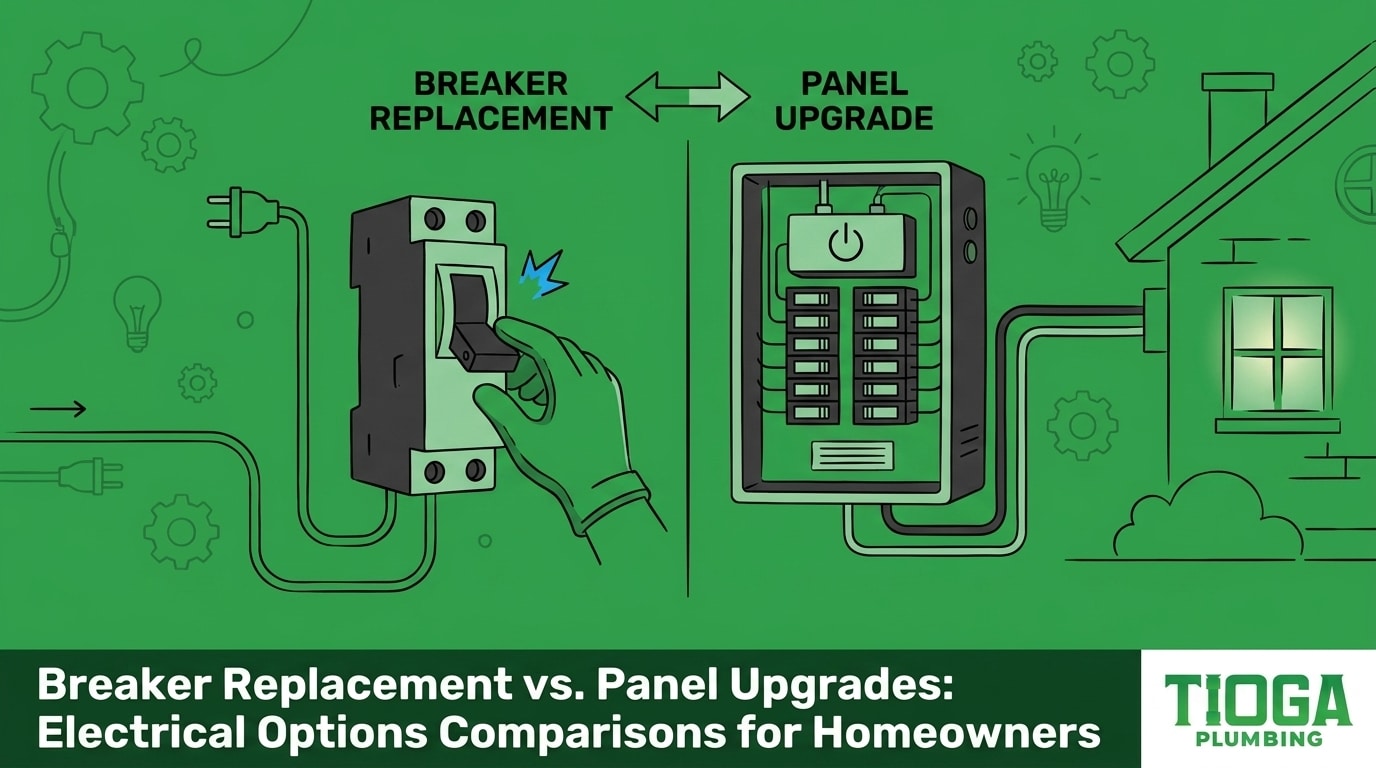
Breaker Replacement vs. Panel Upgrades: Electrical Options Comparisons for Homeowners
Is Your AC Constantly Tripping the Breaker in the Texas Heat? Are you finding yourself standing in front of your electrical panel every afternoon, flipping a tripped breaker just to keep your house cool? Losing your air conditioning during the July peak summer heat is more than just a minor inconvenience; it is a serious... Read more »
Got a $3,000+ Plumbing Quote? Get a Free Second Opinion
If another plumber handed you a quote of $3,000 or more, Tioga will come look at the same job for free and give you a written second opinion — even when the answer is that their price was fair.
Is the Gator Family Membership Worth $149 a Year?
One plan, $149 a year, ten inclusions. We do the arithmetic honestly — including who shouldn't buy it — and show where the membership pays for itself on a single service call.
How Plumbing Financing Works at Tioga (Step by Step)
Six steps from 'I can't pay for this today' to a scheduled repair. Tioga finances through Service Finance Company and Synchrony — a one-minute application that starts with a soft credit pull.
Water Softener vs. Whole-Home Filtration for DFW Homes
They solve different problems, and buying the wrong one is the most common water-treatment mistake we see. A side-by-side of what each removes, what it costs to run, and which DFW homes need both.
Drain Cleaning Cost in DFW: Auger vs. Hydro-Jetting
$185–$325 to auger one fixture, $285–$550 to clear a sewer main, $650–$1,200 to hydro-jet a lateral. Which one your symptoms call for, and why the cheapest option is sometimes the expensive one.

Taking a bite out ofYour Plumbing needs
We make fixing your home easier than ever. Whether it’s a leaky pipe, faulty wiring, or an urgent repair, our experts deliver fast, reliable solutions you can count on.