


 Financing

7/24/2026
What Are the Disadvantages of an Indirect Water Heater?
Share:


Is an Indirect Water Heater the Right Choice for Your Home?
Are you constantly questioning whether your current home infrastructure is truly serving your household’s daily needs? At Tioga Plumbing, our team often hears these concerns from homeowners struggling with aging setups. Relying on our local service expertise and area tips can help you determine the best path forward when evaluating aging plumbing systems. For many homeowners, the core decision point comes down to determining when to stop paying for patchwork repairs on an aging, inefficient system and commit to a complete upgrade. One specific system that often prompts this evaluation is the indirect water heater.
An indirect water heater operates differently than a standard standalone tank. Instead of using its own electric heating element or dedicated gas burner, an indirect system relies entirely on the home’s main space-heating boiler to heat domestic water. A fluid heated by the boiler circulates through a heat exchanger coil located inside the water storage tank, transferring thermal energy to the water you use for showers, dishes, and laundry. While these systems are common in regions where boilers run constantly, they present unique, localized challenges for homeowners in places like Hurst TX—especially when dealing with the intense demands of peak summer heat.
Understanding the mechanical drawbacks of these systems is critical for making informed decisions about your home’s infrastructure. If you are dealing with recurring tripped breakers, slow drains, or inconsistent hot water, it is important to take a step back and evaluate the entire setup objectively. To explore comprehensive solutions for your home, you can review our plumbing and electrical services. The following sections will guide you through the technical drawbacks of indirect water heating, providing the objective criteria needed to assess whether your current system has reached the end of its safe, efficient operational life.
Complete Dependency on a Functioning Boiler
The primary mechanical drawback of an indirect water heating system is its total reliance on a secondary appliance. Because an indirect tank does not possess its own independent heating element, its ability to produce hot water is intrinsically tied to the health, functionality, and maintenance schedule of your home’s space heating boiler. When you rely on two interconnected systems to perform separate daily functions, a fault in one dictates the performance of the other.
This dependency creates a significant vulnerability for daily household routines. If the primary boiler experiences a mechanical failure, loses pressure, or requires emergency servicing, the home loses its domestic hot water supply instantly. Our technicians at Tioga Plumbing frequently respond to calls where a simple lack of hot water stems from a complex breakdown deep within the boiler’s combustion chamber. This single point of failure effectively doubles the impact of a breakdown. Furthermore, having interconnected systems complicates troubleshooting, as the issue could be a faulty aquastat on the tank, a broken circulator pump, or a primary boiler fault.
| System Type | Heating Source | Impact of Boiler Failure | Troubleshooting Complexity |
|---|---|---|---|
| Standalone Tank | Dedicated internal element/burner | None (operates independently) | Low (isolated to one unit) |
| Tankless System | Dedicated internal heat exchanger | None (operates independently) | Moderate (isolated to one unit) |
| Indirect Tank | External space-heating boiler | Total loss of domestic hot water | High (spans two distinct appliances) |
The maintenance burden is also compounded. Servicing an indirect setup requires a technician who is intimately familiar with both domestic plumbing storage tanks and complex hydronic boiler systems. If you are experiencing ongoing issues with your current setup and need a professional assessment, you can contact our water heater specialists to determine the root cause of the inefficiency.
The Ripple Effect of Boiler Failures
To understand the ripple effect of a breakdown, it helps to break down the mechanics of the heat exchanger. The boiler heats a specific transfer fluid, which is then pumped through a closed-loop coil inside the indirect water tank. If the circulator pump responsible for moving that fluid fails, the boiler might be functioning perfectly, yet the water in the tank will remain cold. Conversely, if the boiler’s ignition system fails, the circulator pump will continuously move cold fluid through the tank, achieving nothing. This interconnected mechanical loop means that diagnosing a simple cold shower requires testing multiple components across two heavy-duty appliances, increasing diagnostic time and labor requirements.
Summer Inefficiency and HVAC Strain
One of the most critical gaps in how indirect systems operate relates to our regional climate. While piggybacking domestic hot water off a boiler makes mechanical sense in climates where the boiler runs year-round, doing so in Hurst TX creates severe HVAC inefficiencies. Firing up a heavy-duty boiler during 100-degree July weather is highly disadvantageous for your home’s cooling performance.
To generate hot water for daily showers, laundry, and dishwashing, the home’s boiler must cycle on and fire up, even when space heating is completely unnecessary. Firing a high-capacity, heavy-duty boiler solely to heat a few gallons of domestic water carries a massive energy penalty. The boiler consumes significant amounts of fuel just to bring its own internal mass up to temperature before it can even begin transferring heat to the indirect storage tank.
Beyond the direct fuel consumption, there is a secondary, often-overlooked efficiency penalty: ambient heat generation. Boilers are large combustion appliances that radiate heat into the surrounding utility room, garage, or basement. During peak summer cooling months, this ambient heat gain infiltrates the home’s thermal envelope. As a result, the home’s air conditioning system is forced to work harder, consuming more electricity to remove the excess heat generated by the boiler. Operating combustion space-heating appliances under heavy summer cooling loads results in a drastic overall reduction in home energy efficiency, driving up utility costs across multiple systems simultaneously.

High Upfront Installation and Component Complexities
Transitioning to or replacing an indirect water heating system involves significant logistical hurdles and a high initial investment compared to traditional standalone units. Because the system relies on integration with a primary boiler, the installation process is rarely a simple swap. It requires intricate hydronic plumbing, specialized control wiring, and a thorough balancing of the system.
When evaluating the logistical complexities, homeowners must consider the sheer number of components required to make an indirect system function correctly. In our experience, the decision point often hinges on whether investing heavily in complex, interconnected components is wiser than transitioning to a more streamlined, modern system.
- Intricate Piping Networks: The installation requires specialized copper or PEX piping to create a closed loop between the boiler and the tank, which must be perfectly insulated to prevent thermal loss during transfer.
- Zone Valves and Circulator Pumps: The system requires dedicated mechanical pumps and motorized valves to direct the flow of hot boiler fluid exclusively to the water heater when a drop in domestic water temperature is detected.
- Aquastat Controls: A specialized thermostat (aquastat) must be installed on the indirect tank and wired directly into the boiler’s main control board, allowing the tank to “call” for heat independently of the home’s space thermostats.
- Surrounding Plumbing Infrastructure: Replacing an aging indirect tank often reveals the need for additional plumbing repairs to surrounding infrastructure, such as corroded boiler connections, failing expansion tanks, or degraded pressure relief valves.
The complexity of this installation means that labor requirements are substantially higher than installing a standard electric or gas tank. When an aging indirect system begins to leak or fail, homeowners are faced with a critical choice: continue patchwork repairs on a highly complex, multi-component setup, or use that opportunity to simplify their home’s infrastructure entirely.
Space Requirements and Standby Energy Loss
Beyond the mechanical and financial drawbacks, indirect water heaters demand a substantial physical footprint. Housing both a large space-heating boiler and a separate, bulky indirect storage tank requires significant floor space in a utility room, basement, or garage. For homeowners looking to reclaim square footage or remodel utility areas, this dual-appliance setup is highly restrictive.
Passive Energy Drain
Like all tank-based systems, indirect water heaters suffer from standby heat loss. Standby heat loss occurs when the stored water inside the tank gradually cools down due to the ambient temperature of the room. As the water temperature drops below the aquastat’s set point, the tank forces the boiler to cycle on simply to maintain the temperature of the stored water—even if nobody in the house has opened a hot water faucet. This creates a continuous, passive energy drain.
Insulation Degradation
Older, poorly insulated tanks exacerbate this heat loss over time. As the internal insulation degrades, the rate of thermal transfer increases, causing the boiler to fire more frequently just to combat the ambient cooling. This passive inefficiency stands in stark contrast to modern on-demand systems, which only consume energy at the exact moment a faucet is opened, eliminating standby loss entirely.
When to Transition to a Modern Electric Alternative
Given the drawbacks of boiler dependency, summer inefficiency, and standby heat loss, many homeowners eventually reach a point where upgrading away from an indirect system is the most logical step. Objective criteria for when an aging indirect system has reached the end of its safe, efficient operational life include frequent component failures, noticeable increases in summer cooling bills, and the physical degradation or leaking of the storage tank itself.
Introducing Electric Alternatives
Modern electric alternatives, such as electric tankless water heaters, offer a compelling solution to summer boiler inefficiency and physical space constraints. By eliminating the storage tank entirely, these systems reclaim valuable square footage. More importantly, they allow the home’s main boiler to remain completely shut down throughout the peak-heat summer months, significantly reducing ambient heat generation and easing the strain on the air conditioning system.
Electrical Panel Evaluation
However, transitioning to high-efficiency electric systems in older homes is not exclusively a plumbing project. It requires a thorough evaluation of the home’s electrical panel to prevent recurring tripped breakers. Electric tankless units draw a substantial amount of amperage on demand, and older electrical panels may not have the capacity to support multiple dedicated high-amperage circuits without a professional upgrade.
Evaluating a transition from a boiler-dependent system to an electric tankless unit requires assessing both plumbing and electrical panels simultaneously. As a dual-licensed provider, Tioga Plumbing can perform this holistic infrastructure evaluation seamlessly without the need to hire third-party contractors. A pattern we see often involves homeowners requesting a general plumbing evaluation for an aging setup. Our technicians evaluate the entire infrastructure and provide a detailed report with objective options, allowing the customer to make an informed choice about their upgrade path without pressure.
Before committing to an upgrade, it is vital to understand the specific infrastructure demands of modern units. You can learn more about the specific requirements for electric tankless water heaters to see if your current panel is ready for the transition.
Frequently Asked Questions About Indirect Water Heating
What is the downside of an indirect water heater?
The primary downside is its total reliance on the home’s space heating boiler to function. If the boiler breaks down, you lose both your home heating and your domestic hot water simultaneously. Additionally, they involve high initial setup complexity, require significant floor space, and create severe energy inefficiencies during the summer months when the boiler must run solely to heat water.
Does an indirect water heater run in the summer?
Yes, the boiler must still fire up during the summer solely to heat the domestic water. Even though you do not need space heating, the boiler has to generate thermal energy to transfer to the indirect tank. This process generates ambient indoor heat, which forces your air conditioning system to work harder and reduces your home’s cooling performance.
Are indirect water heaters worth it?
They can be highly efficient in climates where boilers run constantly for space heating, but their value diminishes significantly in hot climates where space heating is rarely needed. In regions with long, intense summers like ours, the energy penalty of running a boiler just for daily showers often outweighs the potential benefits, making standalone or tankless systems a more practical investment.
How long do indirect water heaters last?
An indirect water heater typically lasts between 10 and 15 years, depending heavily on local water quality and routine maintenance. However, because the system is entirely dependent on the boiler, its effective lifespan and reliability are often tied directly to the health of the boiler itself. If the boiler fails prematurely, the indirect tank is rendered useless until major repairs are completed.
Can I replace an indirect water heater with an electric tankless unit?
Yes, transitioning to an electric tankless unit is a great way to eliminate summer boiler operation, but it requires a professional evaluation of the home’s electrical panel capacity. Tankless systems draw a high amount of amperage on demand, and older electrical panels often require upgrades or dedicated circuits to ensure the system operates safely without causing recurring tripped breakers.
Evaluate Your Water Heating Options with an Expert
Understanding the mechanical and efficiency drawbacks of an indirect system is the first critical step in improving your home’s overall energy profile. By recognizing the hidden costs of summer boiler operation, standby heat loss, and interconnected component failures, you can make a highly informed decision about your property’s infrastructure.
If you are dealing with aging equipment, frequent repairs, or inefficient performance, it is time to seek a comprehensive, objective evaluation of your plumbing and electrical systems from the team at Tioga Plumbing. Do not settle for patchwork repairs on a failing setup. Schedule a professional inspection today to discuss your repair versus replacement options, ensuring you have clear, objective criteria for when a system has reached the end of its safe operational life.
Share:
Taking a bite out of Your Plumbing needs
 817-484-5356
Other Plumbing Services
Taking a bite out ofYour Plumbing needs
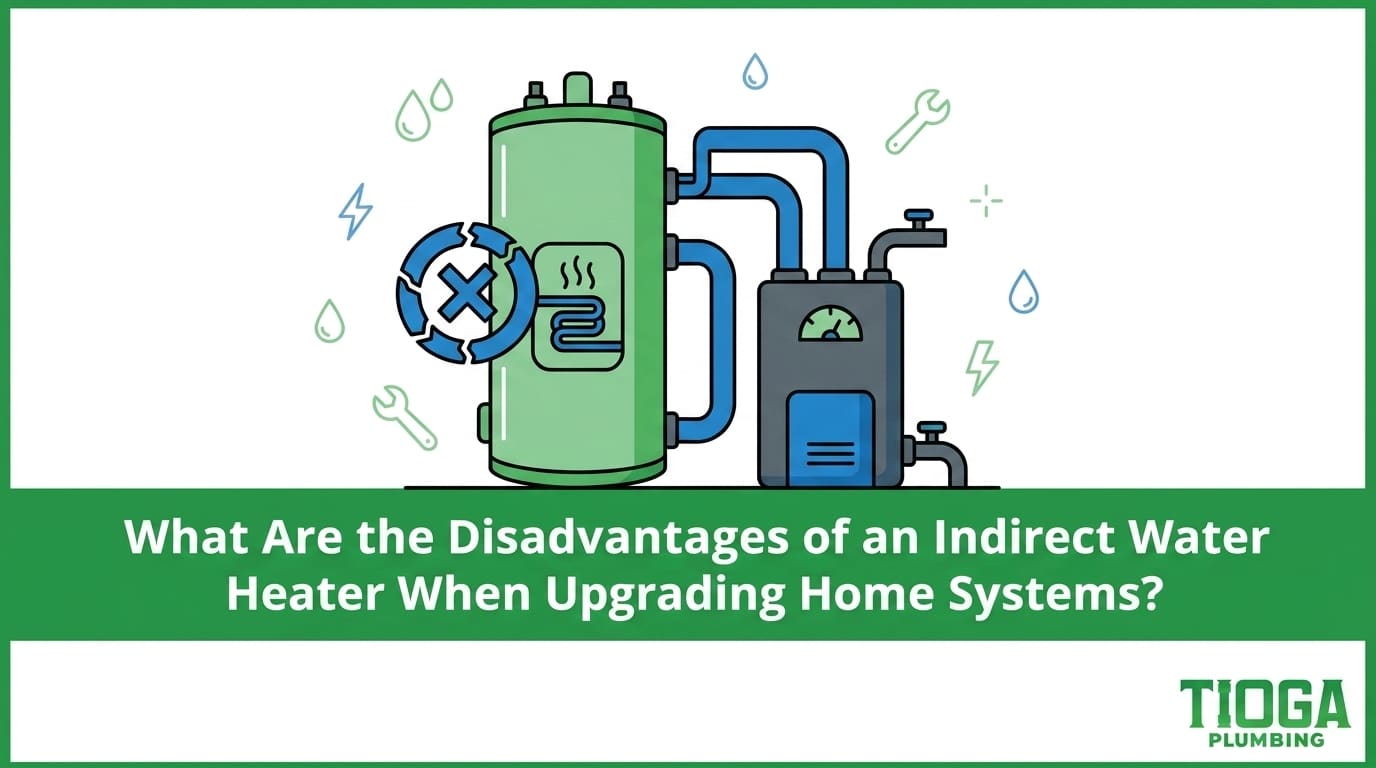
What Are the Disadvantages of an Indirect Water Heater When Upgrading Home Systems?
Navigating System Upgrades and Heavy Cooling Loads Your air conditioner is running non-stop to fight off the afternoon heat, but every time the compressor kicks on, the lights in your living room dim. In our years of keeping homes comfortable across Hurst TX, the team at Tioga Plumbing has found that when you start making... Read more »
Summer Home Maintenance FAQ: Managing AC Electrical Loads and Water Heater Strain
Are Your Home Systems Ready for the Summer Heat? Is your air conditioner running nonstop, but your electrical panel keeps shutting it down? When putting together a seasonal home maintenance checklist, our team at Tioga Plumbing notices that most homeowners focus entirely on changing air filters and cleaning gutters. However, the extreme demands placed on... Read more »
Troubleshooting Tripped Breakers: Is It Your AC or Your Electrical Panel?
The Myth of the Broken AC During a Heatwave When our dispatch team at Tioga Plumbing receives frantic calls on a scorching afternoon, most people believe that because their lights dimmed or the power abruptly cut out, their air conditioner has completely failed. However, when you are looking for reliable home maintenance tips and troubleshooting... Read more »
Breaker Replacement vs. Panel Upgrades: Electrical Options Comparisons for Homeowners
Is Your AC Constantly Tripping the Breaker in the Texas Heat? Are you finding yourself standing in front of your electrical panel every afternoon, flipping a tripped breaker just to keep your house cool? Losing your air conditioning during the July peak summer heat is more than just a minor inconvenience; it is a serious... Read more »
Got a $3,000+ Plumbing Quote? Get a Free Second Opinion
If another plumber handed you a quote of $3,000 or more, Tioga will come look at the same job for free and give you a written second opinion — even when the answer is that their price was fair.
Is the Gator Family Membership Worth $149 a Year?
One plan, $149 a year, ten inclusions. We do the arithmetic honestly — including who shouldn't buy it — and show where the membership pays for itself on a single service call.
How Plumbing Financing Works at Tioga (Step by Step)
Six steps from 'I can't pay for this today' to a scheduled repair. Tioga finances through Service Finance Company and Synchrony — a one-minute application that starts with a soft credit pull.
Water Softener vs. Whole-Home Filtration for DFW Homes
They solve different problems, and buying the wrong one is the most common water-treatment mistake we see. A side-by-side of what each removes, what it costs to run, and which DFW homes need both.
Drain Cleaning Cost in DFW: Auger vs. Hydro-Jetting
$185–$325 to auger one fixture, $285–$550 to clear a sewer main, $650–$1,200 to hydro-jet a lateral. Which one your symptoms call for, and why the cheapest option is sometimes the expensive one.

Taking a bite out ofYour Plumbing needs
We make fixing your home easier than ever. Whether it’s a leaky pipe, faulty wiring, or an urgent repair, our experts deliver fast, reliable solutions you can count on.