


 Financing

7/21/2026
Common Homeowner Questions Answered: What Are the Disadvantages of an Indirect Water Heater?
Share:


Are You Struggling to Diagnose Water Heater and System Failures This Summer?
Are you dealing with an electric water heater that keeps tripping the breaker, or noticing a sudden drop in water pressure just as the peak summer heat sets in? Having your common homeowner questions answered is the first step toward restoring your home’s reliability. When residential infrastructure begins to fail, it is often difficult to pinpoint exactly where the root cause lies. A tripped breaker could be a failing electrical panel, or it could be a warning sign that your water heater is drawing too much amperage. A drop in water pressure might be a municipal issue, or it could signal a hidden leak beneath your foundation.
For residents in Hurst TX, the intense July heat pushes both plumbing and electrical systems to their absolute limits. The primary challenge is knowing exactly which troubleshooting steps are safe to perform at home, and when a situation requires a licensed expert. Guessing wrong can lead to severe water damage or dangerous electrical hazards. If you are experiencing overlapping issues and need professional diagnostics, exploring comprehensive plumbing and electrical services is the safest path forward. Rather than risking a DIY repair on a complex fault, contact our team to get a definitive answer on what is happening behind your walls.
How Does Peak Summer Heat Affect Your Home’s Infrastructure?
Extreme weather does more than just make your air conditioner run constantly. Prolonged periods of 95-degree heat fundamentally alter the physical environment around and inside your home, creating unique stress points for both your plumbing network and your electrical panel. Understanding these environmental factors helps explain why so many system failures happen simultaneously during the hottest months of the year.
The Impact of Expansive Clay Soils on Plumbing
The ground beneath Hurst TX consists heavily of expansive clay soils, which are highly reactive to moisture levels. During the wet spring months, this clay absorbs water and expands, pushing upward against your foundation and buried utility lines. However, when the intense heat and dry conditions of July arrive, that same soil undergoes severe desiccation. It shrinks rapidly, pulling away from underground plumbing lines and removing the physical support those pipes rely on.
This shifting soil puts immense mechanical stress on your plumbing system. Rigid PVC and cast-iron sewer lines can belly, sag, or even shear completely at the joints. Water supply lines are similarly stressed, which is why sudden, unexplained drops in water pressure or mysterious foundation leaks are so prevalent during peak summer droughts. The infrastructure is literally being pulled in different directions by the earth around it.
Electrical Grid Load and High Ambient Temperatures
Just as the soil affects your plumbing, the ambient heat directly impacts your home’s electrical efficiency. High ambient temperatures increase electrical resistance within your home’s wiring. When wiring gets hot, it becomes harder for electricity to flow through it efficiently, which means appliances have to draw slightly more amperage to perform the same amount of work.
During a summer heatwave, your air conditioning system is already drawing massive amounts of power to keep the house cool. When you add in the increased resistance from the heat, and then an appliance like an electric water heater kicks on, the total load on your electrical panel can easily exceed its safe operating capacity. This compounding stress is a primary reason why older breakers suddenly start tripping in the middle of summer, even if they functioned perfectly fine all winter.
What Are the Disadvantages of an Indirect Water Heater?
When evaluating aging plumbing appliances, homeowners often ask about the specific drawbacks of the systems they currently have installed. An indirect water heater is a system that does not have its own dedicated heating element or gas burner. Instead, it relies entirely on the home’s main boiler (which provides space heating) to heat a fluid. That fluid is then circulated through a heat exchanger coil located inside a separate water storage tank, indirectly heating the domestic water supply.
Dependency on a Boiler System
The most significant objective drawback of an indirect water heater is its absolute dependency on the boiler system. Because the water tank has no independent way to generate heat, it is mechanically tethered to the boiler’s performance.
- Single-point failure: If your boiler breaks down, you lose both your home’s space heating and your domestic hot water supply simultaneously.
- Mechanical complexity: The system requires a complex network of circulator pumps, zone valves, and aquastats to communicate between the tank and the boiler. More moving parts mean more potential points of failure.
- Maintenance overlap: Servicing the hot water supply often requires troubleshooting the boiler, making diagnostics more time-consuming.
Summer Inefficiency and Energy Waste
While indirect systems can be highly efficient in the dead of winter when the boiler is already running to heat the house, their efficiency plummets during the summer months in places like Hurst TX. Running a heavy-duty boiler in July is inherently counterproductive.
- Short cycling: The massive boiler must fire up solely to heat a small amount of water for a shower or a load of laundry, wasting significant energy in the process.
- Standby heat loss: Like all tank-based systems, the stored water slowly loses heat over time, forcing the boiler to cycle on periodically just to maintain the temperature, even when no hot water is being used.
- Ambient heat generation: Firing a boiler in the summer radiates unwanted ambient heat into your utility room or basement. This excess heat forces your air conditioning system to work harder to cool the home, compounding your energy waste.
Why Might an Electric Tankless System Be a Better Alternative?
Given the summer inefficiencies and large physical footprint of indirect boiler systems, modern alternatives have become increasingly popular. Electric tankless water heaters offer a completely different approach to domestic hot water, eliminating standby heat loss by only engaging when a hot water fixture is actively opened.
Space Saving and On-Demand Efficiency
Removing an indirect system means you can eliminate both the bulky storage tank and, if you are transitioning to electric space heating as well, the massive boiler itself. This reclaims a significant amount of square footage in a utility room or garage. Because a tankless unit mounts directly to the wall and only heats water on demand, there is zero summer boiler cycling and zero ambient heat radiated into the home during the hottest months of the year.
| System Feature | Indirect Water Heater | Electric Tankless Water Heater |
|---|---|---|
| Physical Footprint | Requires separate boiler and large storage tank | Wall-mounted, compact, zero floor space |
| Summer Efficiency | Low (boiler must fire just for hot water) | High (only runs when fixture is open) |
| Heat Source | Dependent on central space-heating boiler | Independent, high-amperage electrical elements |
| Standby Energy Loss | Yes (tank loses heat over time) | None (no water is stored) |
Dual-Trade Installation Requirements
While the benefits are clear, upgrading to an electric tankless system is not a simple swap. These units require a massive amount of instant electrical power to flash-heat water as it flows through the heat exchanger. A whole-home electric tankless unit often requires three or four dedicated high-amperage breakers, which means your home’s electrical panel must have the capacity to handle an additional 120 to 160 amps of load.
Simultaneously, the installation requires precise plumbing retrofits, including proper flow-rate sizing, isolation valves for future descaling, and correct pipe sizing to ensure adequate water pressure. Because Tioga Plumbing holds licenses in both trades, our team can handle the complete integration of electric tankless systems without you needing to hire multiple contractors. We manage both the panel upgrades and the water line modifications seamlessly. For a deeper dive into what this transition entails, you can review the specific plumbing requirements for electric tankless water heaters.
Where Is the Go/No-Go Threshold for DIY Repairs?
When a system fails, the immediate reaction is often to try and fix it quickly. However, modern plumbing and electrical systems carry significant safety risks. Establishing strict boundaries between what is safe to check yourself and what requires a professional is vital for protecting your home and your family.
Safe At-Home Troubleshooting Steps
Before calling for help, there are a few objective, non-invasive checks you can safely perform to rule out simple user errors or external utility issues.
- Verify power switches: Ensure that the service switch near your water heater or HVAC unit hasn’t been accidentally bumped to the “off” position.
- Check thermostat settings: Confirm that your water heater thermostat is set between 120°F and 130°F, and that nobody has altered the settings.
- Look for visible leaks: Visually inspect the base of appliances, exposed pipes, and supply lines for pooling water or active dripping. Do not touch or attempt to tighten pressurized fittings.
- Check the main breaker: Look at your electrical panel dead front (without removing the cover) to see if a breaker has tripped due to a passing storm.
When to Call a Licensed Professional
The moment troubleshooting requires tools, dismantling equipment, or interacting with live voltage or pressurized water, you have crossed the no-go threshold. Continuing past these points can void manufacturer warranties, violate local building codes, and create severe safety hazards.
- Multiple tripped breakers: If you reset a breaker and it trips again immediately, or trips repeatedly over a few days, stop. This indicates a hard short or a dangerous overload. The breaker is a safety device doing its job to prevent a fire.
- Sudden, unexplained drops in water pressure: This often points to a failed pressure reducing valve (PRV) or a catastrophic underground leak caused by shifting Hurst TX soils.
- Signs of electrical scorching: Any black marks, melting plastic, or burning smells near an outlet, appliance, or electrical panel requires immediate professional intervention.
- Water pooling near electrical appliances: The crossover between plumbing leaks and electrical systems is incredibly dangerous. Never wade into standing water near a failing appliance.

Frequently Asked Questions: Water Heaters, Plumbing, and Electrical Loads
Understanding the interplay between your home’s various systems can help you identify problems before they escalate into emergencies. Here are clear, technical answers to the most frequent inquiries we receive regarding system stress.
Why is my electric water heater tripping the breaker?
The short answer is usually a grounded heating element or a failing thermostat. When the protective outer sheath of a submerged heating element cracks, the conductive core makes direct contact with the water, creating a short circuit that instantly trips the breaker. Additionally, during the intense heat of summer, your electrical panel is already running hot due to increased ambient temperature and heavy HVAC usage. This baseline stress means that even a minor amperage spike from a failing water heater component is enough to push the breaker past its safety threshold.
Is it safe to reset a tripped breaker multiple times?
No, resetting a breaker that repeatedly trips is a severe fire hazard. A circuit breaker is not a standard switch; it is a critical safety device designed to cut power when the wiring is drawing more current than it can safely handle. If a breaker trips immediately after being reset, it means the fault (such as a short circuit or a stalled motor) is still present. Forcing the breaker back on allows extreme heat to build up in the wiring hidden behind your walls, which can melt the insulation and start an electrical fire.
What causes a sudden drop in water pressure during summer?
Sudden pressure drops are typically caused by high municipal demand or underground line stress. During peak summer months, municipal water systems experience massive draw from irrigation and cooling towers, which can lower the baseline pressure delivered to your home. More concerningly, the hot, dry weather causes expansive clay soils to shrink and shift. This movement can stress your main water supply line, causing a hidden underground leak that diverts water before it ever reaches your indoor fixtures.
When should I call a plumber vs fix it myself?
You should call a licensed plumber anytime a repair involves cutting pipes, altering gas lines, or dealing with hidden leaks. Safe DIY is strictly limited to visual inspections, plunging a standard toilet clog, or replacing a showerhead. Modern plumbing systems operate under high pressure and strict municipal codes. Attempting to solder copper, crimp PEX, or diagnose a failing water heater without proper licensing not only risks catastrophic water damage but can also void your homeowner’s insurance coverage for any resulting floods.
Can a failing water heater affect my home’s electrical system?
Yes, a failing appliance can put dangerous strain on your entire electrical panel. As components like heating elements or circulator pumps age and degrade, they become less efficient and begin to draw excess amperage to perform their basic functions. This constant over-drawing generates heat at the breaker connection point. Furthermore, if a water heater develops a leak, pooling water can easily reach nearby electrical outlets or the unit’s own wiring harness, creating a severe shock hazard that affects the safety of the entire electrical grid in your home.
Get Professional Diagnostics for Your Home’s Systems
Understanding the disadvantages of indirect water heaters, the realities of summer system stress, and the mechanics of expansive soils is the first step toward maintaining a safer, more reliable home. The extreme heat in Hurst TX leaves very little room for error when it comes to electrical loads and plumbing integrity. When components fail, guesswork is the last thing you need.
Getting your common homeowner questions answered correctly requires more than just a quick visual check; it requires a deep understanding of how these distinct systems interact under pressure. A direct, technically sound resolution removes the uncertainty from diagnosing complex faults. If you are experiencing overlapping issues and need a clear, professional assessment, do not risk crossing the DIY threshold. Ensure your home is safe and up to code by reaching out to contact our team for comprehensive, dual-trade diagnostics today.
Share:
Taking a bite out of Your Plumbing needs
 817-484-5356
Other Plumbing Services
Taking a bite out ofYour Plumbing needs
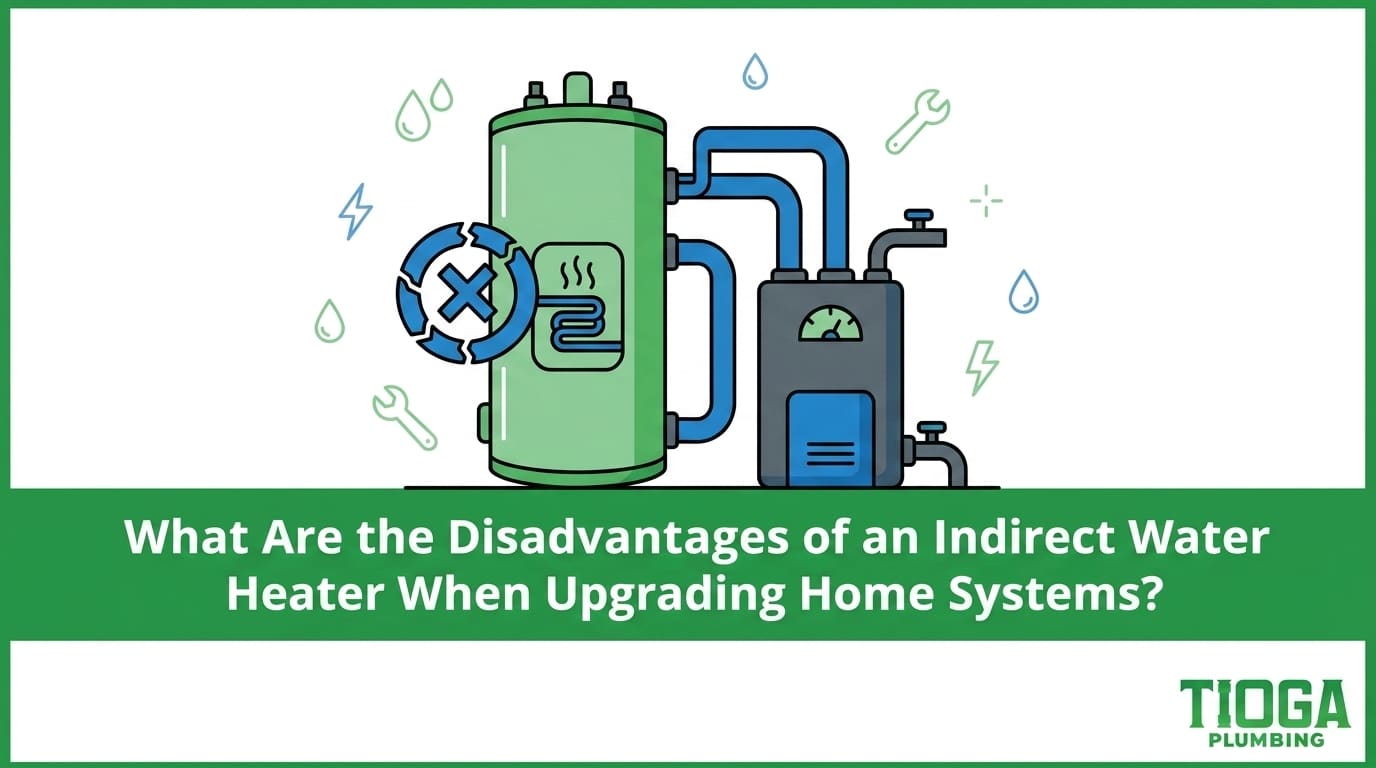
What Are the Disadvantages of an Indirect Water Heater When Upgrading Home Systems?
Navigating System Upgrades and Heavy Cooling Loads Your air conditioner is running non-stop to fight off the afternoon heat, but every time the compressor kicks on, the lights in your living room dim. In our years of keeping homes comfortable across Hurst TX, the team at Tioga Plumbing has found that when you start making... Read more »
Summer Home Maintenance FAQ: Managing AC Electrical Loads and Water Heater Strain
Are Your Home Systems Ready for the Summer Heat? Is your air conditioner running nonstop, but your electrical panel keeps shutting it down? When putting together a seasonal home maintenance checklist, our team at Tioga Plumbing notices that most homeowners focus entirely on changing air filters and cleaning gutters. However, the extreme demands placed on... Read more »
Troubleshooting Tripped Breakers: Is It Your AC or Your Electrical Panel?
The Myth of the Broken AC During a Heatwave When our dispatch team at Tioga Plumbing receives frantic calls on a scorching afternoon, most people believe that because their lights dimmed or the power abruptly cut out, their air conditioner has completely failed. However, when you are looking for reliable home maintenance tips and troubleshooting... Read more »
Breaker Replacement vs. Panel Upgrades: Electrical Options Comparisons for Homeowners
Is Your AC Constantly Tripping the Breaker in the Texas Heat? Are you finding yourself standing in front of your electrical panel every afternoon, flipping a tripped breaker just to keep your house cool? Losing your air conditioning during the July peak summer heat is more than just a minor inconvenience; it is a serious... Read more »
Got a $3,000+ Plumbing Quote? Get a Free Second Opinion
If another plumber handed you a quote of $3,000 or more, Tioga will come look at the same job for free and give you a written second opinion — even when the answer is that their price was fair.
Is the Gator Family Membership Worth $149 a Year?
One plan, $149 a year, ten inclusions. We do the arithmetic honestly — including who shouldn't buy it — and show where the membership pays for itself on a single service call.
How Plumbing Financing Works at Tioga (Step by Step)
Six steps from 'I can't pay for this today' to a scheduled repair. Tioga finances through Service Finance Company and Synchrony — a one-minute application that starts with a soft credit pull.
Water Softener vs. Whole-Home Filtration for DFW Homes
They solve different problems, and buying the wrong one is the most common water-treatment mistake we see. A side-by-side of what each removes, what it costs to run, and which DFW homes need both.
Drain Cleaning Cost in DFW: Auger vs. Hydro-Jetting
$185–$325 to auger one fixture, $285–$550 to clear a sewer main, $650–$1,200 to hydro-jet a lateral. Which one your symptoms call for, and why the cheapest option is sometimes the expensive one.
Taking a bite out ofYour Plumbing needs
We make fixing your home easier than ever. Whether it’s a leaky pipe, faulty wiring, or an urgent repair, our experts deliver fast, reliable solutions you can count on.